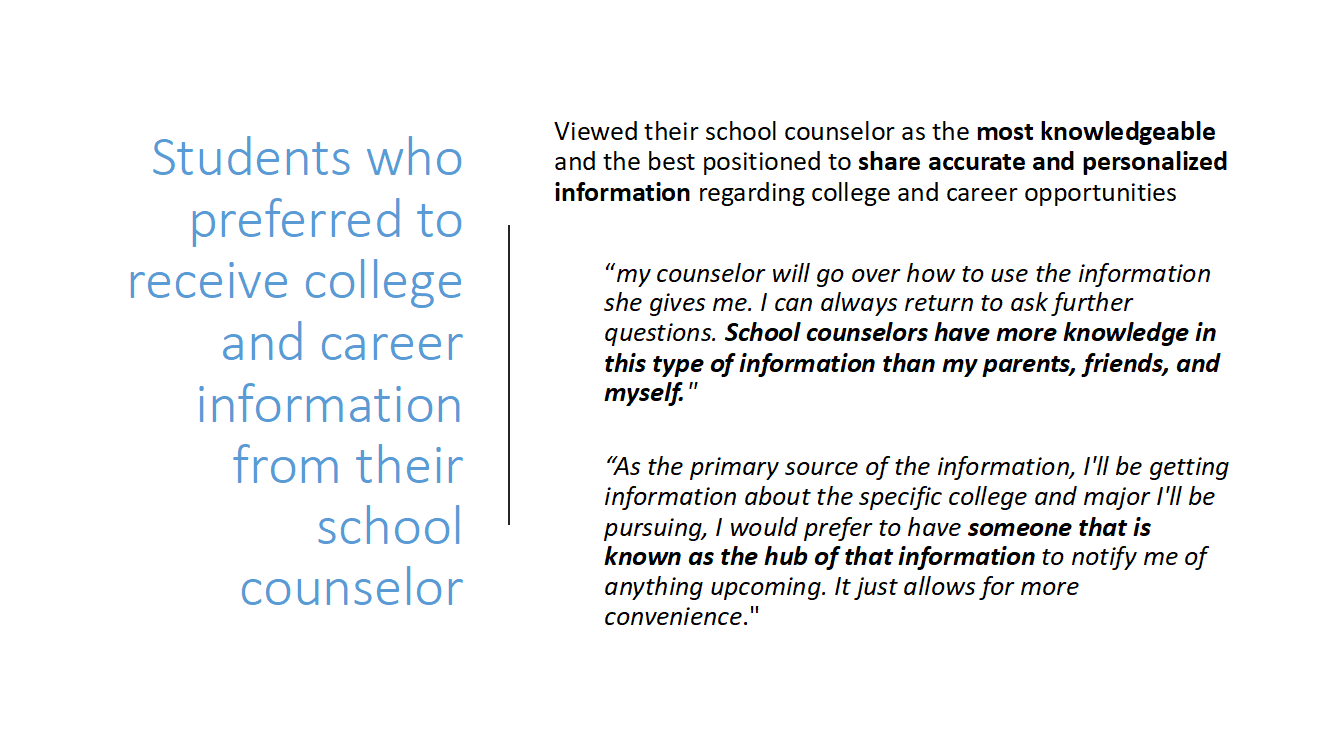
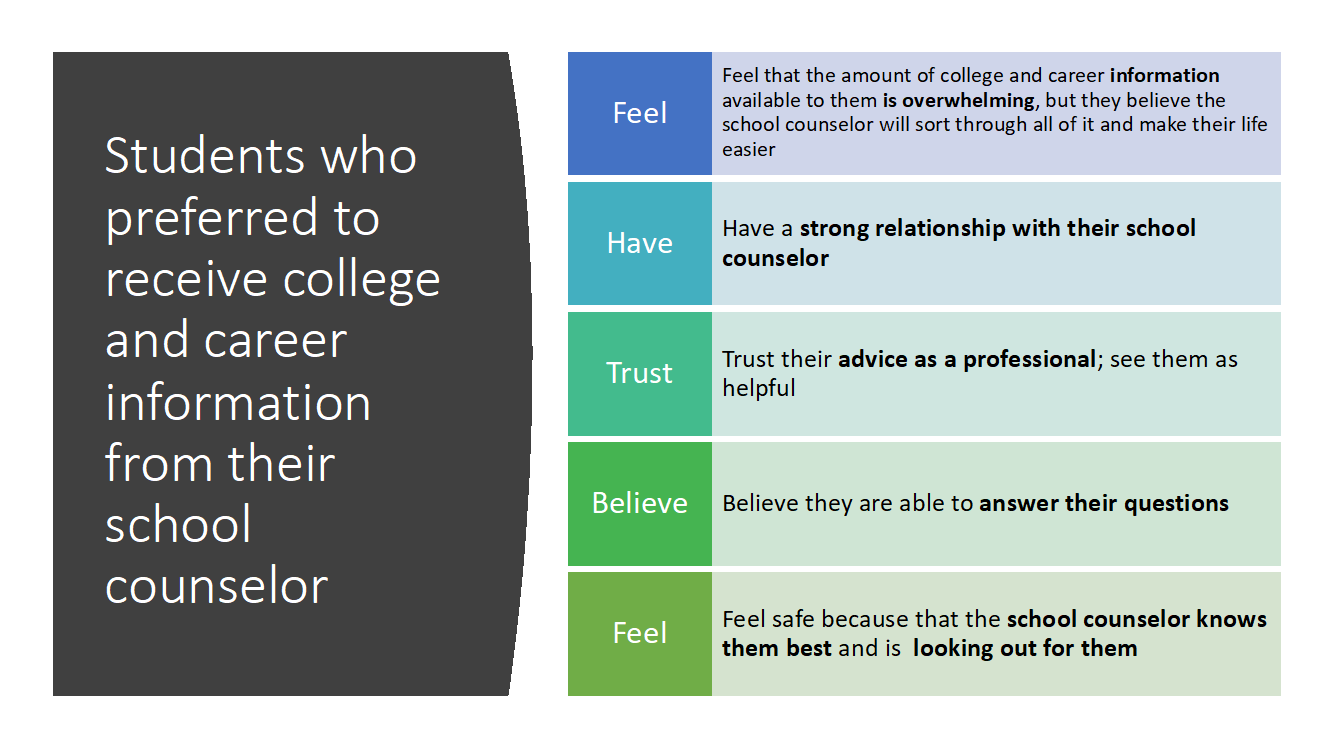
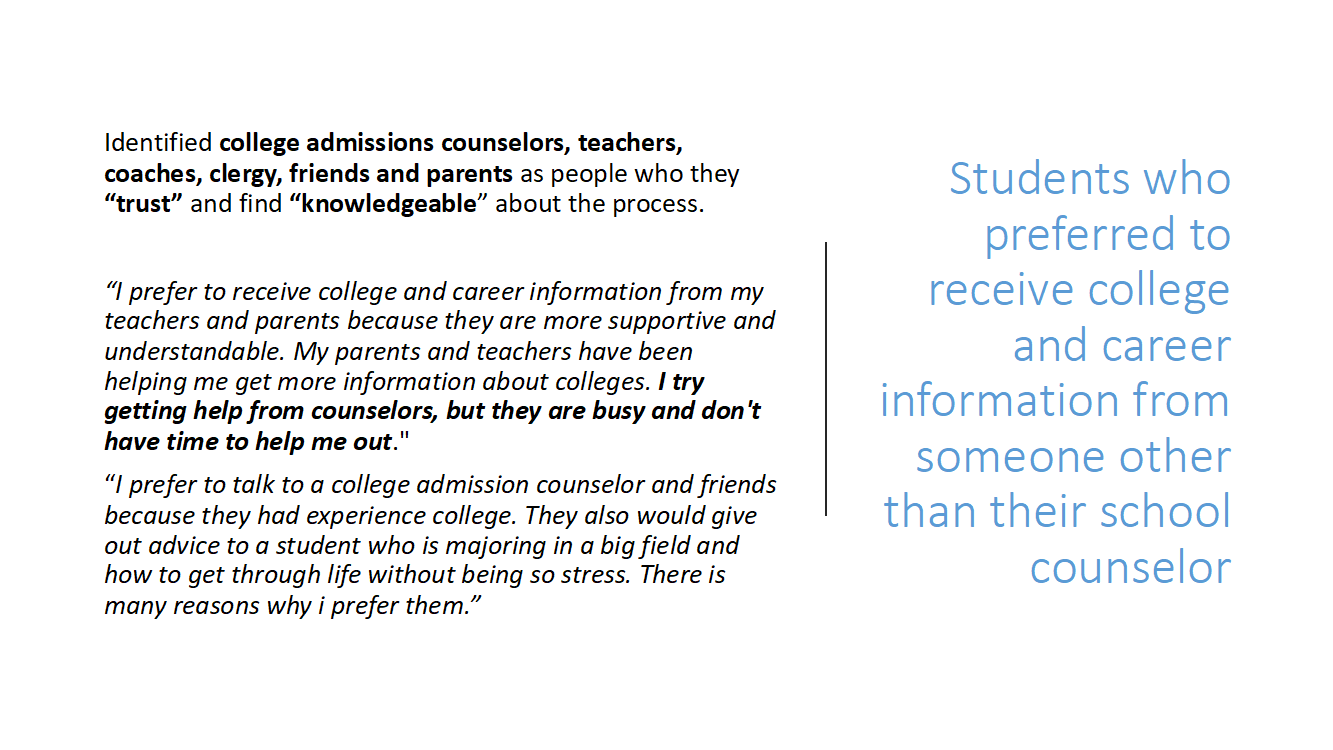
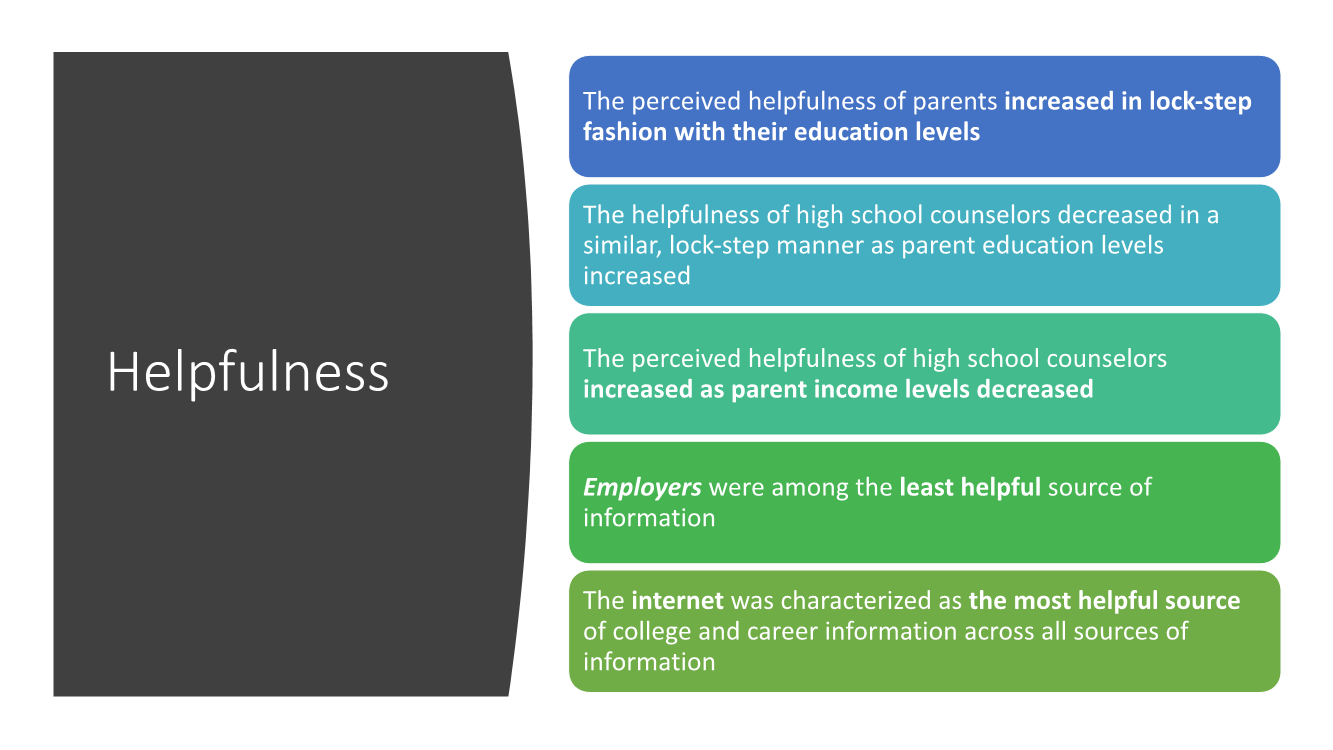
Preferences for information and perceived helpfulness would most certainly shift if we embraced these changes. Currently, perceived helpfulness does not line up perfectly with student preferences for information. While students prefer to receive college and career information from their high school counselor, they do not find them to be the most helpful. This could be in part because students consistently mentioned how difficult it is to meet with their counselor. First generation students and students from low-income families ranked their school counselor as the most helpful source of information, however as parental income levels and postsecondary degree attainment increased, viewing school counselors as their preferred source of college and career information decreased in lockstep fashion.
Media
Students indicated that the internet is their most helpful source of college and career information. Although information is readily available on the internet, it does not mean students have knowledge, access, or understanding of what is available or how to discriminate between accurate, helpful information versus harmful guidance on the internet. While the internet was rated to be a helpful source of information, it was also among the least-preferred information sources, with interpersonal communication methods (email and one-on-one) being the most preferred. Students (and adults) need help determining which internet resources are useful, accurate and meet their needs.
Communication
Email and one-on-one conversation were the most preferred means of communicating college and career information (69% prefer email and 48% prefer one-on-one). This finding was replicated in another study and upon further conversation with the students, it was discovered that students were using email as a protective shield to help them sort out communication in which they did not want to engage in. This is somewhat alarming given the high rate of communication that higher education institutions send out through email. Many students miss key pieces of information because they are not opening their inboxes.
Understanding the ways in which students are engaging with technology is an important piece of the advising puzzle. We can educate college and career advising professionals on this common practice so they can begin to help students understand how email is used by higher ed institutions and why engaging with email to filter unwanted contact can cause problems that may potentially lead to the loss of key opportunities. Also, we may be seeing another manifestation of the role relationships play in their decision-making process. Students prefer one-on-one contact, which makes sense given the complex yet personal nature of navigating the postsecondary pipeline. They prefer to open email from someone they know, just as they engage in conversations with someone who they find as knowledgeable, trustworthy, and accurate. We need to ensure that we are building a system that provides access to knowledgeable and trustworthy college and career advising professionals, one that ensures support for all students especially those who have been discriminated against. We are all responsible for calling this out and demanding the
college counseling changes that must happen now.
The findings of this study are useful for K‐12 education, college access, and higher education professionals to consider when developing policies and programs to provide college and career information to students.