We must recognize that students from low-income families are more likely to have compounding difficulties, particularly during the
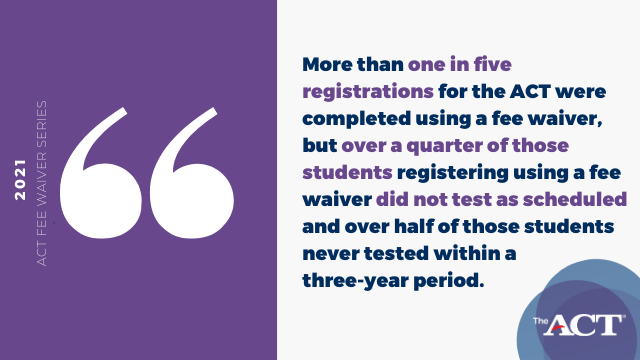
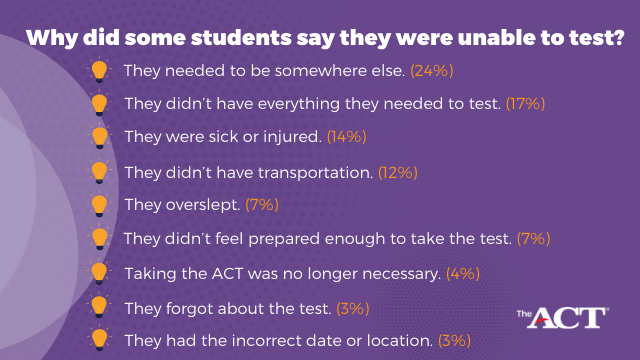
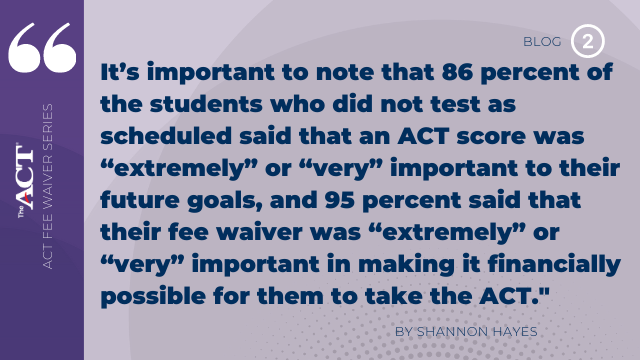
pandemic but also during the earlier years we studied. Students believed taking the ACT was important for their future, but they were still unable to test as planned due to a wide variety of obstacles. Students who could not afford an ACT test without a fee waiver may not have been able to afford a car, or even a rideshare. Many had to work to support themselves and their families and these jobs may have prevented them from studying as much as they would have liked, or kept them up late the night before the test.
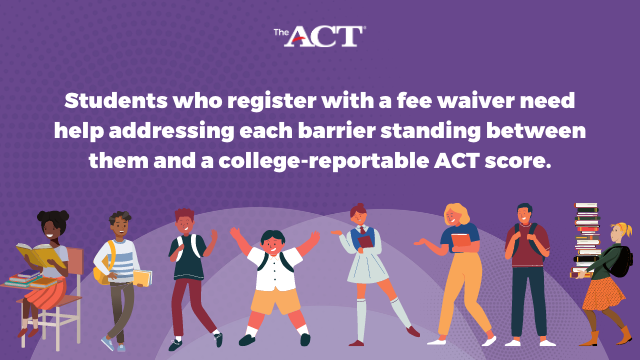
These students need help addressing each barrier standing between them and a college-reportable ACT score.
While some of the students’ reasons for not testing were not actionable, like illness or injury, others could have been overcome—if, for example, students had been given reminders or other supports from stakeholders including educators, family members, mentors, policymakers, and ACT. Many of the reasons given may have ultimately been avoidable, though some clearly were not.
We are committed to helping all registered students, particularly those using fee waivers, successfully take the ACT test. Simply offering a fee waiver is not enough, and our research identifies additional supports ACT and our partners can put in place to help students succeed. The supports that help students maximize fee waiver usage can be found in our
recommendations, which will be highlighted in our next blog post.
This set of in-depth blogs covers our four-part report series on fee waivers. A previous blog summarized new research on fee waivers. Stay tuned for the next blog post, which will summarize recommendations to policymakers and educators for partnering with ACT to increase access to and completion of the ACT test.