

We often talk about college readiness in terms of courses, grades, and test scores. Yet research suggests another factor may be just as important: human connection. Student success also develops through networks of mentors, organizations, and institutions that provide information, encouragement, resources, and opportunities.1
Among the organizations that have long strengthened these networks are historically Black Greek organizations. Through scholarships, mentoring, youth development initiatives, leadership programs, and community service, fraternities and sororities help connect students to opportunities they might not otherwise discover.
Organizations such as Alpha Phi Alpha Fraternity, Inc. and Delta Sigma Theta Sorority, Inc. demonstrate how trusted community institutions can complement the work of schools, families, and other local organizations by making pathways to higher education more visible and accessible.
Two generations with one common experience
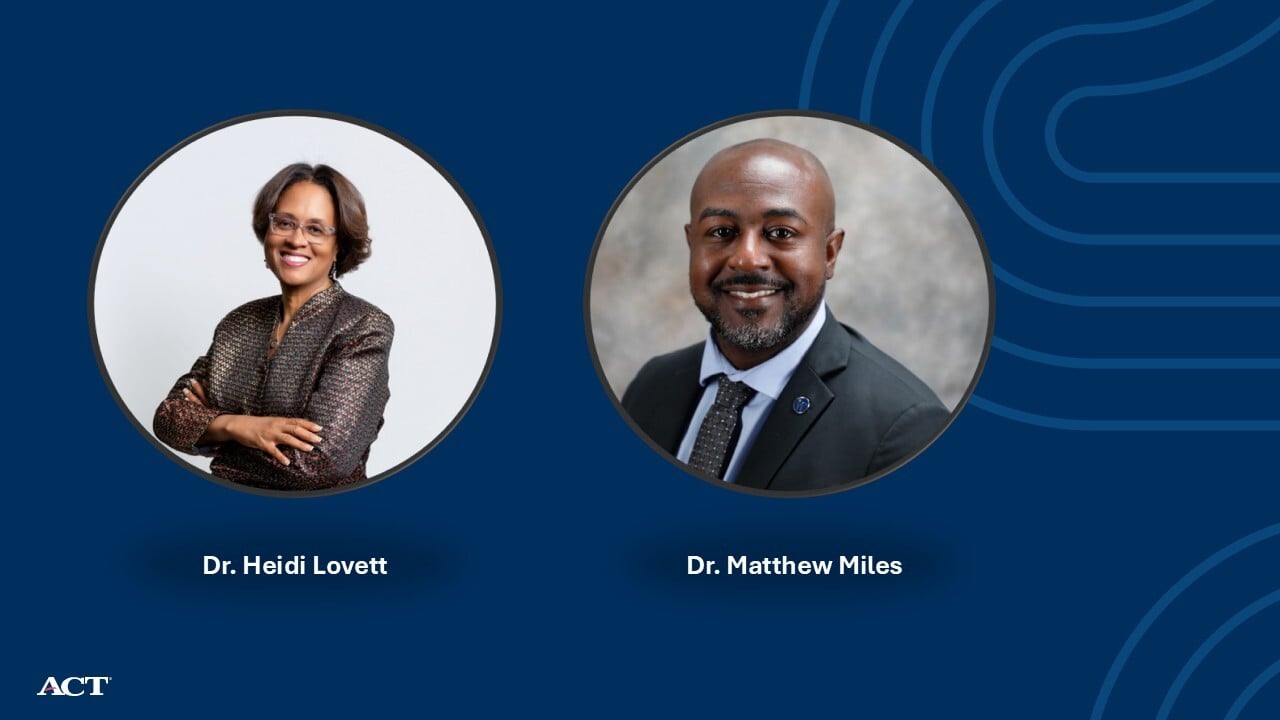
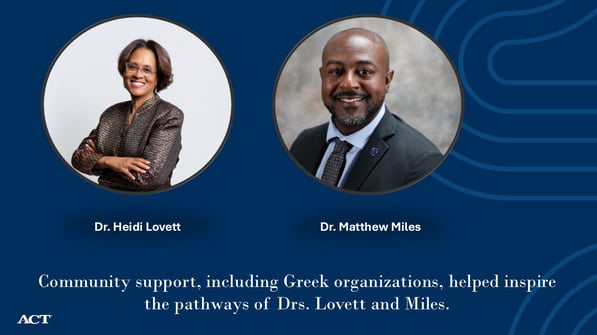
The experiences of two former ACT test-takers illustrate how these educational ecosystems work in practice. Although they represent different generations and different organizations, both Dr. Heidi Lovett, a member of Delta Sigma Theta Sorority, Inc., and Dr. Matthew Miles, a member of Alpha Phi Alpha Fraternity, Inc., describe educational journeys shaped not simply by an ACT testing experience, but by the network of people and organizations that helped them recognize and pursue opportunity.
Programs such as Delta GEMS, Delta Academy, EMBODI, along with Alpha Phi Alpha's mentoring initiatives and community events like Haircuts for Kids, create spaces where students receive encouragement, develop leadership skills, build relationships with mentors, and learn about scholarships, college preparation, and career opportunities.
These efforts reinforce what research continues to show: students rely on a broad constellation of people, resources, and organizations when making educational decisions and overcoming barriers.
Long before college planning apps, online scholarship databases, and social media, students often relied on teachers, community leaders, family friends, social organizations, and mentors to introduce them to opportunities they otherwise may never have known existed. Those resources are still relevant today.
For Dr. Miles, who took the ACT test more than two decades ago, that network began with a civics teacher at Wossman High School in Monroe, Louisiana. Recognizing his college potential, the teacher encouraged him to attend a local ACT preparation workshop after explaining that his initial score would limit scholarship opportunities. The additional preparation improved his score and expanded his financial aid options. "I did not know about the ACT workshop that was being hosted in the community until my civics teacher told me," explained Miles.
Dr. Lovett tested nearly four decades ago, and while the network looked significantly different, the purpose remained the same. Through gifted and talented coursework at Eleanor McMain Magnet Secondary School in New Orleans, Xavier University's summer program, and opportunities connected to her ACT performance, she gained access to dual enrollment experiences and competitive scholarship offers.
She also credits her broader community for motivating her by maintaining high expectations for her future, “Friends and church members expected me to attend college and become a world-class leader."
Connections create pathways
Although their journeys were unique, both leaders point to the same conclusion: educational opportunities often emerge through interconnected systems of support.
Neither credits a single program or individual for their success. Instead, their stories demonstrate how multiple institutions can work together to create a stronger pathway to higher education.
The role of educators and community organizations
Their reflections also underscore an important lesson for educators and community leaders: resources create impact only when students know they exist. Whether a teacher shares information about ACT preparation, a community organization promotes college-going expectations, a summer program builds academic confidence, or a fraternity or sorority connects students to scholarships and mentors, every relationship strengthens the educational ecosystem supporting student readiness and success for their postsecondary journeys.
Today, both leaders continue investing in those same networks. Miles, now a dean of students at the Mississippi University for Women and a ministry leader, continues advocating for systems that foster belonging and holistic student success. Lovett, a ministry leader and educator, champions the work of churches advancing education, youth-serving organizations, scholarship programs, and Delta Sigma Theta Sorority in expanding educational opportunities throughout Louisiana and Texas.
How can educators and communities make opportunities more visible to the students who need them most?
One answer lies in strengthening the educational ecosystems that surround students. Schools can work alongside community organizations, Greek organizations, alumni groups, employers, and local leaders to enhance students' college preparation. When these institutions work together to share information about ACT preparation, scholarships, dual enrollment, mentoring, and college planning, students are more likely to recognize — and act on — the opportunities available to them.
The human network behind student success is not built by a single program or institution. It’s built through communities working together, with Greek Letter organizations serving as important partners in ensuring that every student can see, access, and pursue the opportunities that shape their future. When it comes to supporting student success in higher education, it truly does take a village.
1 Perna, 2006; Stanton-Salazar, 2011
