



Class of 2026, Augusta Independent School, Kentucky
When people talk about the college application journey, the spotlight almost always falls on senior year. Deadlines, essays, and decisions create an atmosphere of high stakes and high pressure. But what often gets overlooked is the year that quietly shapes everything: junior year.
ACT’s American College Application Campaign realized that high school juniors are frequently underrepresented in college access initiatives, even though their junior year plays a crucial role in researching opportunities and making informed choices regarding their future education.
Recognizing this gap, ACAC created College Match Day.
Now expanding into its third year and available nationwide after a two-year pilot with select host sites, College Match Day is a forward-thinking initiative designed to give students a head start on the college exploration process, before the pressure of applications begins.
An earlier start brings the college finish line into view for many students
For many students, especially those from lower-income backgrounds, first-generation college families, or historically underrepresented groups, the college search process can feel overwhelming and out of reach.
College Match Day helps change that by creating structured, in-school opportunities for juniors to explore their options early. The goal is simple but powerful: ensure students are informed, confident, and prepared before senior year.
What really is a ‘college match’?
It’s not just about picking a college; a core component of College Match Day is helping students rethink how they approach college choice.
Instead of focusing solely on rankings or brand recognition, students are encouraged to evaluate: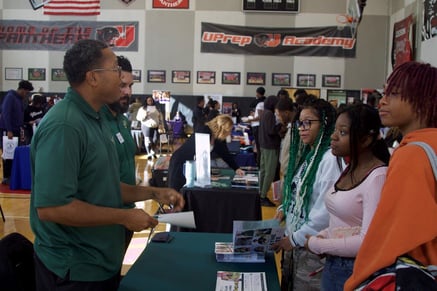
- Academic alignment
- Financial affordability
- Campus culture and environment
- Personal goals and support systems
This shift toward ‘match and fit’ gives students a more realistic and empowering framework for decision-making.
College Fair at UPrep Academy, Michigan
Real opportunity, real impact
One of the most compelling aspects of College Match Day is how it comes to life in schools.
Over the past two years:
- More than 17 schools have participated, with approximately 6,900 students engaging in the program and creating an average list of three colleges each.
- There was a 7.7% increase in college readiness, leaving nearly 67% of year-two pilot program students feeling more prepared for postsecondary pathways.
- More than half of participants reported that the experience directly influenced their college application decisions.
- Year‑over‑year gains of 7.4% in academic and financial alignment signal continued effectiveness of junior-year college matching and advising.
One student remarked, “College Match Day helped me realize there are so many options out there that I never considered.”
Counselors from Augusta Senior High School in Kentucky, Godwin High School in Michigan, and El Toro High School in California have shared how the initiative is reshaping conversations with students, sparking earlier engagement, and helping students feel more confident about their futures.
“Students gave feedback saying College Match Day was incredibly helpful and [that they] understood how to find better colleges that fit their preferences and needs,” said a site coordinator in California.
Equity is at the heart of this program
College Match Day isn’t just about timing; it’s about access.
By embedding activities into the school day, all students have the opportunity to engage with the program. Some of the activities that participating schools created included:
- College and career fairs
- Class or conference style presentations
- College tours, both in-person and virtual
- ACT prep sessions
- Resume writing sessions
- Personal statement writing sessions
- Roundtable discussions
- Match fit activities
- Alumni panels
These types of engaging school-day activities are especially important for students who may face barriers outside of school, including work obligations, family responsibilities, transportation issues, or limited access to college counseling resources.
Building momentum for senior year
When students enter senior year with a clear understanding of their college options, outlooks shift.
Participants in College Match Day come away with realistic and attainable college or postsecondary lists to take into their senior year, creating a clearer picture of what their futures could look like.
By doing some of the legwork for post-graduation plans in their junior year, students don’t feel as overwhelmed by the search, application, and looming deadlines process; they’re already familiar with and refining their choices.
As one student participant said, “Visiting the campus gave me a real sense of what college life would be like. Seeing a dorm room for the first time helped me picture myself there.”
Creating a College Match Day at your school
This College Match Day Host Site Implementation Guide can help you get started and ensure that you have an event that inspires students to pursue their college dreams and equip them with the tools to make those dreams a reality.
If you want some reassurances before planning an event, data from grant-receiving schools that participated in the last two years showed several positive effects from College Match Day programs. The college applications of those students who participated in the program these past two years closely matched their junior year plans. Faculty also reported that they were also more motivated to focus on their future college goals.
A simple idea with lasting impact
At its core, College Match Day is about meeting students earlier, guiding them intentionally, and ensuring no one is left out of the process.
By focusing on students’ junior year, ACT’s College Match Day is helping schools build a more equitable and effective path to college — one where every student has the opportunity to explore, plan, and succeed.
